The when of paving matters almost as much as the how. Hot mix asphalt has a narrow temperature window for placement and compaction. Pick the wrong month and you get a thinner, less dense surface that fails years early. Pick the right month and you can also save 10 to 15 percent on the bill. This guide covers the timing rules and the budget angle. Run pricing for your area through the cost calculator.
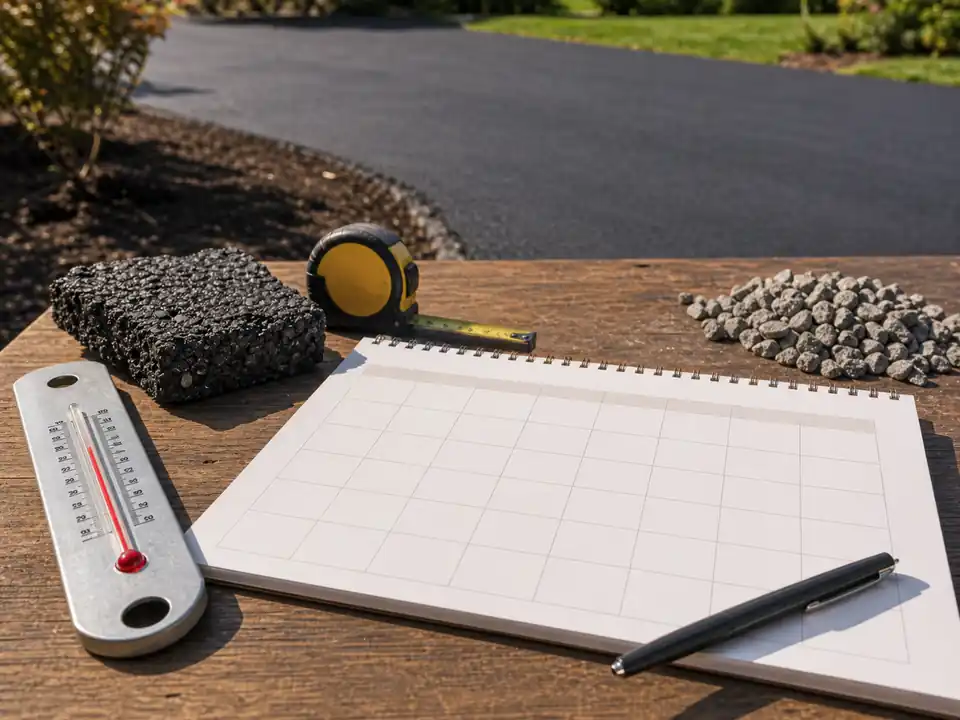
The temperature rule
Hot mix asphalt arrives on site at 250 to 300 degrees Fahrenheit. It has to be placed, smoothed, and rolled before it cools below about 175 degrees. Air temperature, surface temperature, and wind all push that window. The National Asphalt Pavement Association recommends air and surface temperatures above 50 degrees Fahrenheit and rising for proper compaction.
- Below 40 degrees F: Don't pave. Mix cools before it can be rolled.
- 40 to 50 degrees F: Marginal. Possible with extra additives and tight crew timing. Contractor-judgment.
- 50 to 85 degrees F: The sweet spot. Mix stays workable. Compaction reaches target density.
- 85 to 95 degrees F: Workable but watch surface heat. Black asphalt under direct sun can hit 140 degrees.
- Above 95 degrees F: Difficult. Mix stays soft for hours and shows tire marks until it cures.
The seasonal calendar (most of the US)
- December to March: Closed window in most northern states. Possible in southern states.
- April to May: Spring window opens. Contractors hungry for work after winter. Best value window of the year.
- June to August: Peak season. Long days, dry weather, full crew schedules. Highest prices.
- September to October: Fall window. Crews still busy but capacity opens up. Second-best value window.
- November: Closing fast in northern states. Good in southern states.
The shoulder-season pricing trick
Paving contractors in cold-climate states are slammed May through August and idle in December through March. April and September to October are the in-between months where they have crews available but are competing for fewer jobs. A homeowner who books in those windows can save 10 to 15 percent on the same job, sometimes more.
The exact savings vary. Get three quotes the same week in April and three the same week in July and the gap is usually visible. The FTC consumer site recommends comparison shopping on home improvement projects, which is what this trick exploits.
What about rain?
Hot mix cannot be placed on a wet surface. Even a damp base reduces bond and lowers compaction density. Most contractors will not pave if rain is in the next 24 hour forecast or if the surface is wet from morning dew. Plan for at least one weather-day delay during spring or fall. Paving on a sunny day after a rainy stretch is fine if the base has dried. The National Weather Service hourly forecast is the easiest sanity check before locking a date.
Curing across seasons
New asphalt cures faster in warm weather and slower in cool weather. See our asphalt curing time guide for the full timeline. Quick version: drivable in 24 to 48 hours regardless of season. Walking in hours. First sealcoat at 6 to 12 months. Spring and fall installs need a slightly longer wait before the first sealcoat than summer installs.
Avoid these timing mistakes
- Paving on a hot summer day with heavy point loads coming. Trailer tongues and RV jacks leave permanent marks on a 95 degree surface.
- Paving right before a freeze. Newly placed asphalt is vulnerable to a hard frost in the first 48 hours.
- Paving on top of a wet base. Base saturation is the biggest hidden cause of early failure.
- Trying to sealcoat the same year. Wait 6 to 12 months. Read when to sealcoat for the full rule.
How to use timing in negotiation
- Get three quotes in early April or mid September.
- Mention you have multiple bids and ask if there is a "fill the schedule" rate.
- Be flexible on the install date by a week or two. Crews will fit you between bigger jobs.
- Ask whether the price changes if you book now for a slot 4 to 6 weeks out.
Score every quote with our quote checker before you sign. The cheap timing should not come with a cheap scope.
How long does paving take?
A typical 600 to 1,200 sq ft residential driveway is one to two days of crew work. Day one is usually demo, base prep, and grading. Day two is paving and rolling. Larger jobs take longer. The asphalt is drivable in 24 to 48 hours and walkable within hours.
References for temperature ranges, NAPA placement specs, and pricing data are on the sources page.