Short answer: You shouldn't pave a driveway over a septic tank. That holds in almost all cases. Paving covers the lids. You need those open to pump and inspect the tank. The asphalt and car weight can crack or crush it. Many local codes ban it outright. Reroute the driveway instead. A buried, crushed tank can cost 1,500 to 30,000 dollars to fix.
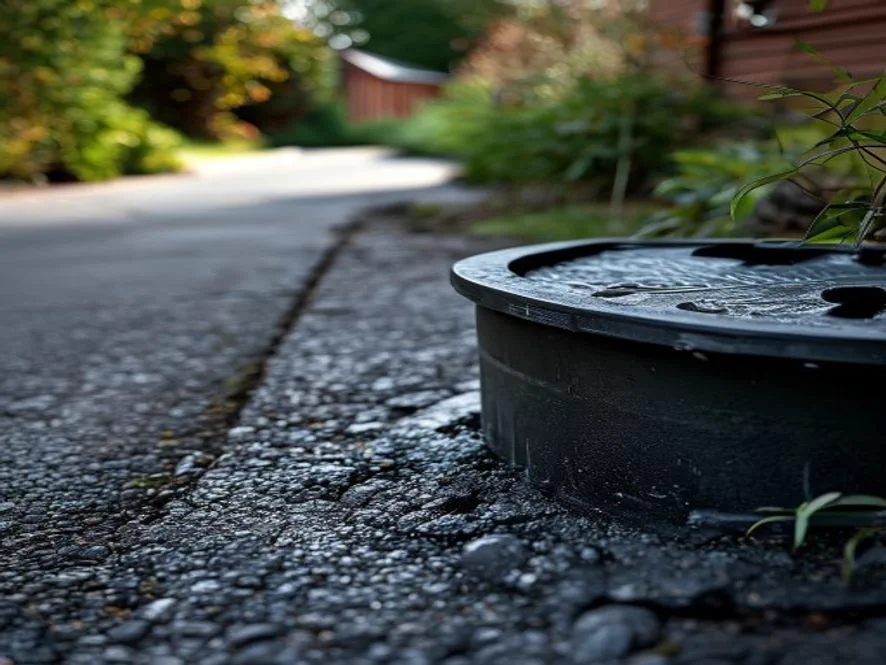
Why you should not pave over a septic tank
A septic tank isn't built to carry weight. It sits in soft soil and holds liquid. The lid and top handle light foot traffic. They're not made for cars. Pour asphalt and park a truck on it. The load can crack the top.
You also lose access. A tank needs pumping every three to five years. The pump truck must reach the lids. What if asphalt covers them? The crew has to cut through your new driveway. That ruins the paving and your budget.
And there's the smell and gas problem. Tanks vent gases. Seal one under asphalt and you can trap pressure. That can cause backups. None of it is worth the small bit of space you gain.
The drain field is even more fragile
The tank is one thing. The leach field is worse to pave over. Some call it the drain field. It's a set of pipes laid in gravel. They let treated water soak into the soil. The field needs loose soil and air to work.
Driving and paving press the soil down hard. Packed soil blocks the flow. The field stops draining. Then sewage can back up into the house. Or it pools in the yard. It's a foul, costly mess.
Asphalt also seals out air and rain. The field needs both to stay healthy. The EPA septic guide is clear on this. Keep traffic and cover off the tank and the field. Septic nearby? Then good driveway drainage matters even more.
What it can cost you
Why do people pave over a tank? To save a little money or space. The risk runs the other way. One mistake here can wipe out years of savings.
- Pump access cut: 1,500 to 4,000 dollars. Crews dig up asphalt to reach the lids.
- Cracked tank lid or top: 1,500 to 6,000 dollars. You repair it or replace it.
- Crushed or caved in tank: 5,000 to 15,000 dollars for a full new tank.
- Ruined drain field: 10,000 to 30,000 dollars to rebuild the field.
- Code fines and re-do: Varies. Add the cost to tear out the paving.
That's a wide range. The high end is real. Few home repairs cost more than a failed drain field.
Are there any exceptions?
At times, yes. But you need care and a sign off. A pro can design a reinforced span over the tank. It carries the load without resting on the tank. Think of a small bridge made of concrete and steel.
It needs riser lids brought up to the new surface. That way you can still pump. It also needs a permit. Your local health department must sign off too. It's not a do it yourself job.
Even then, most experts say one thing. Avoid the drain field at all costs. A field has no safe way to carry a driveway. Always pull the right permits first. Who do you call? Our note on whether you need a permit for an asphalt driveway covers that.
Safer ways to route the driveway
The smart move is to plan around the tank and field. A driveway can curve. A septic system can't move. So bend the path to keep it clear.
First, find your system. Get the as built drawing from the county. Or have a pro find it on site. Mark the tank, the lids, and the full field. Then design the driveway to skip all of it. Leave a safe margin too.
Any driveway needs a solid base to last. Build it on good ground away from the field. That's the right plan. Our base prep guide shows how to set that up. A small detour now saves a huge bill later.
Talk to the right people first
Before any paving, make two calls. Call your local health or septic office. Call a licensed septic pro. They know the local rules. They also know where your system sits.
Many areas need a set distance from any paving. It applies to both the tank and the field. Some ban any cover over the field at all. The rules protect your water and your wallet.
A good paver asks about your septic before they quote. If one shrugs it off, find someone else. The cheap, fast choice costs the most in the end. Plan it right. Then your driveway and your septic both last for decades.