Short answer: you have three ways to do it. A saw cut is the cheapest. It fits a short, straight run on an older driveway. A bore costs more but leaves your asphalt whole, so it is the safe pick for a new or wide driveway. An open trench only helps where there is dirt or grass to dig, not finished pavement. Below I walk each one. You get the 2026 price and the patch step most crews rush. First, call 811 before anyone digs. They mark your buried lines for free.
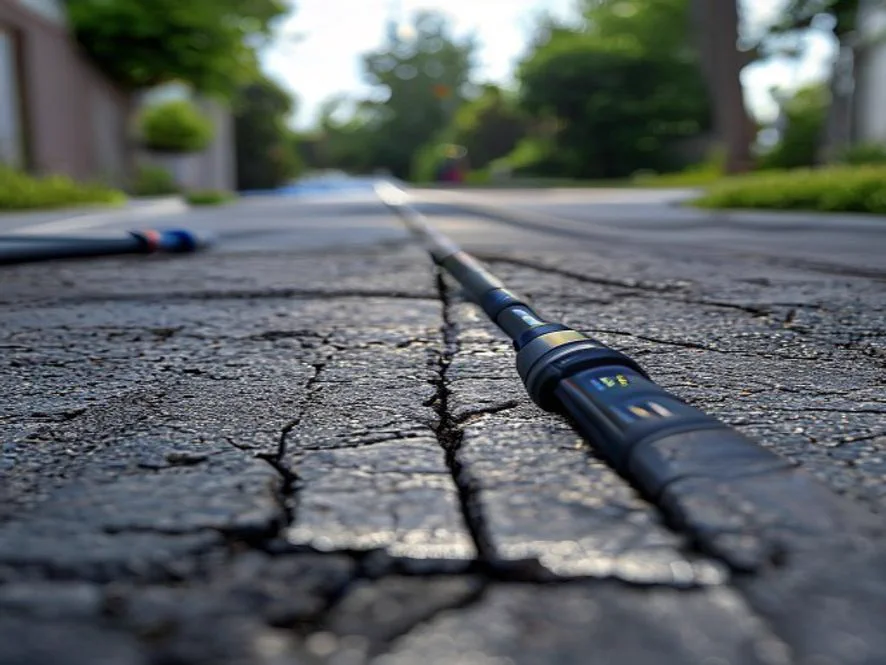
The three ways to get power across
All three end up the same. A pipe runs from the panel side to the charger side. It sits deep enough to meet code. What changes is how much asphalt you tear up and what you pay.
- Saw cut and patch: 300 to 900 dollars. Best for a short, straight run on an older driveway.
- Bore under the driveway: 800 to 2,500 dollars. Best for a new, wide, or curved driveway you do not want to cut.
- Open trench: 8 to 20 dollars per foot. Best only where the run crosses lawn or soil, not pavement.
Method 1: Saw cut and patch
The crew scores a thin slot across the driveway with a saw. They lay the pipe in it. Then they fill the slot back up and patch the top. It is fast and cheap. The catch is a seam in your surface for good. On an older driveway with some wear, the seam hides well. On a fresh black driveway, it shows.
The patch is what makes or breaks it. The slot has to be filled and packed down in layers, not dumped full at once. Then the base gets built back up. The hot mix goes on top, gets tamped flush, and the seam gets sealed. Skip the packing and that strip sinks in one season. It is the same failure I cover in the driveway settling fix guide. Seal the seam like any crack, the way the crack sealing guide shows, so water never gets under it.
Method 2: Bore under the driveway
A bore is the no-cut way. A small drill head goes in on one side. It travels under the driveway and comes up on the far side. The crew pulls the pipe back through the hole. Your surface never gets touched. No seam. No patch. No weak spot.
You pay for that. A bore needs a special rig and a skilled hand, so it costs more than a saw cut. It earns its keep when the driveway is new, when it is wider than about 12 feet, or when the path curves. If you just paid to pave, a bore keeps that work safe. The same goes for anyone who plans a thick pad for a heavy truck, which the thickness guide covers.
Method 3: Open trench
An open trench is a plain dig, lay, and cover. It is the cheapest way to move power over distance. But it only works across ground you can dig. Across finished asphalt it makes no sense. You would rip out a whole strip and repave it. Use a trench for the lawn or gravel part of the run. Then switch to a saw cut or a bore for the short piece that crosses the pavement. Good base work matters here too, the same as in a new install in the base prep guide.
2026 cost by method
These are typical installed prices for the crossing alone. They do not include the charger or the panel work. Your electrician prices the wiring on its own.
- Saw cut and patch, up to 20 ft: 300 to 900 dollars.
- Bore, up to 30 ft: 800 to 2,500 dollars.
- Open trench in soil: 8 to 20 dollars per foot.
- Permit and the cover-up check: 50 to 300 dollars.
- Pipe, fittings, and warning tape: 40 to 150 dollars.
Add it up. Most crossings land between 500 and 3,000 dollars before the charger. The federal Alternative Fuels Data Center has a good primer on home charging if you are still picking one.
How deep does the pipe go?
Depth is set by code, not by you. Under a driveway, the National Electrical Code wants at least 18 inches of cover over a pipe. It wants 24 inches over bare buried cable. Some towns ask for more. Your inspector has the last word, so check the number before anyone fills the slot. Lay a strip of warning tape over the pipe too. It warns the next person who digs that a live line sits below.
Permits and the check you cannot skip
This is electrical work. It needs a permit and a check almost everywhere. There is also a cover-up check, called the concealment inspection. The inspector looks at the open slot or bore before it gets covered. They confirm the depth and the pipe. Patch it first and you may have to dig it back open. Does the run touch the apron near the street? Then you may need a right-of-way permit too, the same kind in the driveway permit guide. Build the check into your plan so the crew is not left waiting.
The smart move if you have not paved yet
Is a new driveway in your future? Then lay a spare pipe sleeve during base prep. It costs next to nothing while the base is open. And it saves a cut later. Cap the empty sleeve and forget it. When the charger goes in, you pull wire through it. You never touch the surface. Walk through the rest of the day in the paving day prep checklist so the sleeve gets set before the asphalt goes down.
Bottom line
Match the way to your driveway. Older surface and a short straight run? Use a saw cut. Make them pack it down and seal the seam. New, wide, or curved? Pay for the bore and keep your asphalt whole. Either way, call 811 first. Pull the permit. Pass the cover-up check before anything gets buried. Get those three right and the crossing lasts as long as the driveway does.