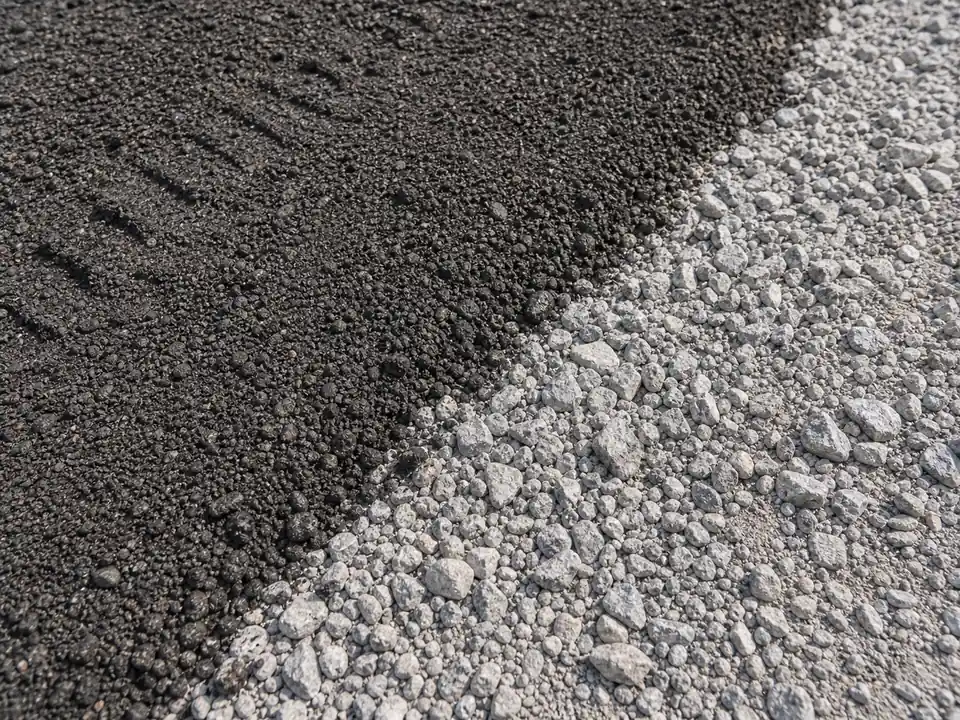
Asphalt millings and gravel are the two most common budget driveway surfaces. They look alike from the curb. They behave nothing alike. Millings re-bond. Gravel does not. That single difference drives almost every other tradeoff. This guide compares the two head to head, with 2026 numbers. For tonnage planning either way, use the millings calculator for millings and the standard tonnage calculator for gravel.
What each material actually is
- Asphalt millings (RAP): Recycled asphalt pavement. Old roads or parking lots are ground up by a milling machine, leaving aggregate coated in residual asphalt binder. The binder is what makes millings re-bond when warm. The Recycled Materials Resource Center at the University of Wisconsin maintains the most-cited engineering reference on RAP performance.
- Gravel: Crushed stone, usually limestone, granite, or river rock. No binder. Stays loose forever. Sized in grades like #57, #411, or 3/4 inch crusher run.
- "Crusher run" or "ABC" stone: A specific gravel grade that includes fines (rock dust) which compact and lock together. Closer to millings in feel than clean gravel.
Cost comparison (2026)
- Asphalt millings: 5 to 25 dollars per ton near asphalt plants. 25 to 50 delivered farther out. Sometimes free near active road work.
- Gravel: 15 to 50 dollars per ton delivered. Crusher run typically the cheapest grade.
- Installation: Both DIY-friendly. Contractor pricing 1 to 3 dollars per square foot for either, including grading and compaction.
Millings are usually cheaper near asphalt plants. Gravel is usually cheaper in rural areas without plants nearby. Get both prices delivered to your address before deciding.
Lifespan
- Millings (compacted, on a flat lot): 7 to 15 years before regrading.
- Gravel: 1 to 5 years before regrading. Faster on slopes or in heavy rain areas.
- New paved asphalt: 15 to 25 years (for comparison). See how long does an asphalt driveway last.
Millings win on lifespan because residual binder re-bonds in summer heat. Each summer locks the surface a little tighter. Gravel never bonds. Every storm shifts it slightly.
Performance head to head
- Surface feel: Millings firm up over time, almost paved. Gravel stays crunchy and loose.
- Dust: Millings produce far less dust. Gravel can be very dusty in dry weather.
- Washout on slopes: Millings hold better up to about 8 percent grade. Gravel washes earlier. See millings on a slope for the grade limits.
- Tracking into garage: Both track. Millings less. Gravel more.
- Snow plowing: Both lose surface to plows. Millings less. Gravel more.
- Maintenance: Millings need a top-up every 5 to 8 years. Gravel needs regrading every 1 to 3 years.
- Curb appeal: Subjective. Millings look darker, almost paved. Gravel looks lighter, more rural.
Where each one wins
- Millings win: Long flat driveways. Budget conscious homeowners near asphalt plants. Anyone who wants a "looks paved" finish at a fraction of the cost. Gentle to moderate slopes (under 8 percent).
- Gravel wins: Rural areas without nearby plants. Short driveways. Homeowners who want the rural-property look. Wet climates where the porous surface helps drainage.
- Neither wins: Steep slopes (above 10 percent). Heavy daily commercial loading. HOA-restricted neighborhoods that require paved finishes.
Installation tips
- Excavate to 4 to 6 inches. Both materials need a stable base.
- Compact a 2 to 4 inch base of crushed stone. Same base for either material on top.
- Spread material evenly. Box blade on a tractor, or by hand with a rake on small jobs.
- Compact with a roller. Especially important for millings to start the binder reactivation.
- For millings: Install in summer if possible. Drive on the surface for the first month to help seat the binder.
- For gravel: Install any season. Top up annually with a small amount of fresh gravel to fill ruts.
Drainage
Both surfaces are porous compared to paved asphalt. Water passes through to the base, which is good for shedding rain but bad for freeze-thaw if the base is not free-draining. The Federal Highway Administration recommends 4 to 6 inches of clean drainage stone under any unpaved residential surface in freeze-thaw climates.
Should you upgrade later?
Both surfaces are good "stage one" choices that can be upgraded to paved asphalt later. The base under either becomes the base for a future asphalt overlay. Just keep the surface graded and drained while you wait. When ready, get a planning estimate with the cost calculator and read overlay vs tear-out for the upgrade path.
References for the cost ranges, RAP definitions, and slope limits are on the sources page.