Asphalt vs concrete is the most common driveway question on Quora, Reddit, and homeowner forums. The right answer depends on climate, budget, lifespan goal, and how you plan to use the driveway. This guide compares the two surface by surface, with 2026 numbers. For a like-for-like cost calculation, run yours through the asphalt vs concrete cost calculator.
The headline numbers (2026)
- Asphalt: 5 to 10 dollars per square foot installed. National average around 6 to 8.
- Concrete: 8 to 18 dollars per square foot installed. National average around 10 to 14.
- Stamped or colored concrete: 15 to 30 dollars per square foot. Premium category.
- Asphalt overlay over sound concrete or asphalt: 3 to 7 dollars per square foot.
Asphalt wins on upfront cost. Run your specific area through the asphalt cost calculator to see what your job lands at.
Lifespan
- Asphalt: 15 to 25 years with maintenance. See how long does an asphalt driveway last for the variables.
- Concrete: 25 to 40 years.
Concrete wins on raw lifespan. But asphalt is easier and cheaper to repair when it fails. The National Asphalt Pavement Association tracks performance data on residential asphalt; the Portland Cement Association publishes the equivalent for concrete.
30-year cost (the comparison that matters)
Most homeowner cost comparisons stop at install price. The fair comparison is 30 years of ownership, including maintenance and one likely replacement on the asphalt side. Rough math for a 600 sq ft driveway in 2026:
- Asphalt: 4,200 install + 2,000 maintenance over 20 years + 4,500 second install + 600 maintenance to year 30 = about 11,300 dollars.
- Concrete: 7,200 install + 1,200 maintenance over 30 years = about 8,400 dollars.
Concrete often wins the 30-year math by a small margin. But the asphalt total is back-loaded; the concrete total is paid up front. That changes the right answer for many homeowners. Use the asphalt vs concrete cost calculator for your area and prices.
Climate fit
- Cold climates (freeze-thaw): Asphalt usually wins. It flexes with temperature swings and tolerates rock salt better than concrete. Concrete is vulnerable to deicer salt damage and joint cracking. The FHWA concrete pavement program documents the deicer scaling pattern in detail if you want the engineering view.
- Hot climates: Concrete usually wins. Asphalt softens above 90 degrees Fahrenheit. Heavy point loads on a hot day leave marks. Concrete stays firm and reflects heat.
- Mixed climates: Either works. Decision usually comes down to budget and curb appeal.
- Coastal: Both work. Salt air ages asphalt binder a little faster but is not a deal-breaker.
Maintenance
- Asphalt: Sealcoat every 2 to 4 years (100 to 250 dollars DIY, 400 to 800 contracted). Crack-fill every spring. See our 5-year maintenance schedule.
- Concrete: Mostly leave it alone. Optional sealer every 5 to 10 years. Joint maintenance as cracks appear. Etch and patch when they do.
Curb appeal
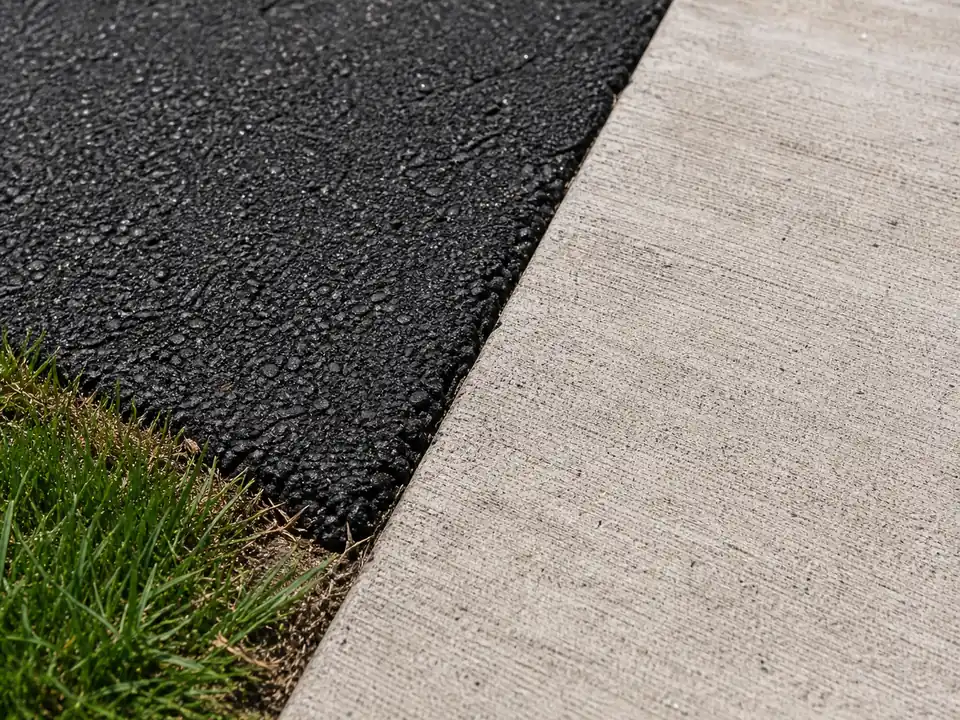
This is partly subjective and partly regional. Asphalt is uniform black, dense, and modern looking. Concrete is light gray (or stamped patterns), brighter against the house, and traditional. Stamped or colored concrete is the highest curb appeal pick but also the most expensive. In some neighborhoods, concrete signals a higher home value bracket. In others, asphalt is the standard and concrete looks out of place. If you want a more rustic, textured look for less money, weigh asphalt vs tar-and-chip as a third option.
Repairs
- Asphalt repairs are easier. Cold patch fixes potholes for 10 to 15 dollars in materials. Crack filler is DIY-friendly. Full overlay is straightforward. See how to repair an asphalt driveway.
- Concrete repairs are harder. Cracks are visible and hard to disguise. Patches show. Full slab replacement is the only clean fix for major failure.
Resale value
Both add curb appeal compared to a worn or gravel driveway. Concrete is generally seen as a slight premium in most US markets, especially in southern states. In northern states with strong asphalt traditions, the gap is smaller. Neither significantly increases home appraised value beyond the cost of the install itself.
The fastest decision
- Tight budget, freeze-thaw climate: Asphalt.
- Long-term homeowner, hot climate, willing to pay more upfront: Concrete.
- Already have concrete that is failing: Asphalt overlay over concrete is sometimes a smart middle path.
- Curb appeal driven, no budget cap: Stamped or colored concrete.
- Want the lowest 30-year total cost in moderate climate: Concrete by a small margin.
- Want the lowest upfront cost: Asphalt.
Sources, regional cost data, and the assumptions behind the 30-year math are on the sources page.