"How do I repair my asphalt driveway?" gets one answer on every contractor site: "call us." This guide gives the real one. Most asphalt repairs are DIY. A small set need a paver and roller. The trick is matching the problem to the right fix and not paying contractor rates for work you can do in an afternoon. For pricing on the repairs that need a pro, check the cost calculator.
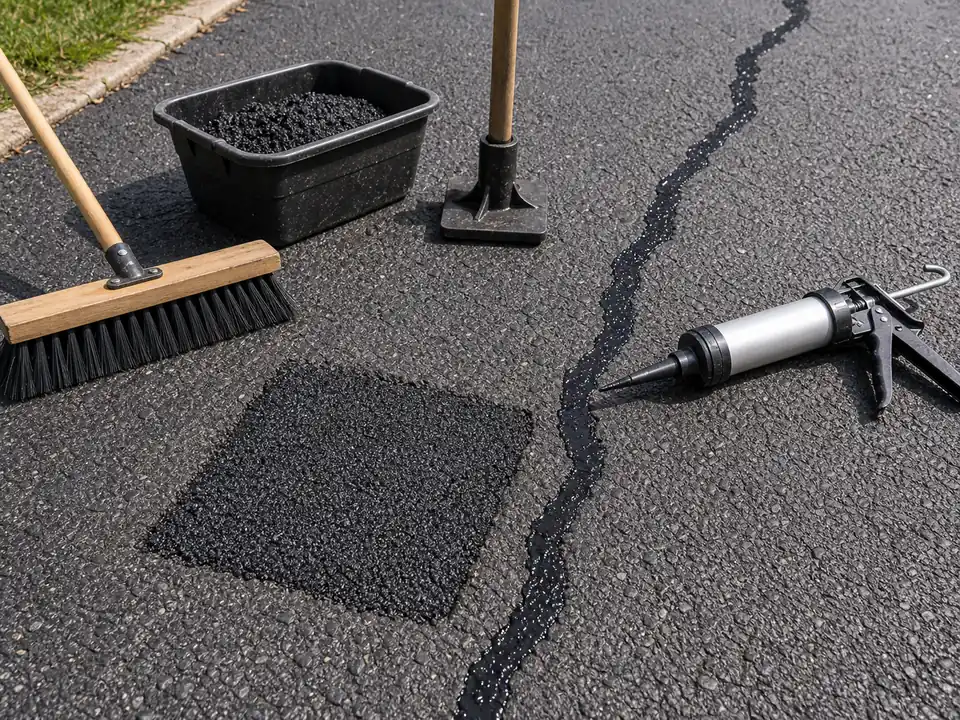
Identify the problem first
Walk the driveway. Note each defect by type. Most repair failures come from using the wrong product on the right problem. Use this quick visual key:
- Hairline cracks (under 1/4 inch): Surface aging. Easy DIY.
- Linear cracks (1/4 to 1/2 inch): Movement stress. DIY with the right filler.
- Wide cracks or potholes (over 1/2 inch): Need a patch, not just filler.
- Alligator cracking: Base failure. Cut-out repair. Contractor work.
- Edge crumbling: Lack of edge support. DIY-fixable with cold patch.
- Oil stains: Cosmetic plus binder damage. DIY with degreaser.
- Standing water or pumping: Drainage or base problem. Investigate before paving over.
Full crack-by-type breakdown is in how to fix cracks in an asphalt driveway.
Crack repair
Hairline and linear cracks are the most common asphalt repair. The right product depends on the width.
- Hairline (under 1/4 inch): Pourable bottle-grade filler. About 5 to 12 dollars. Pour, smooth, cure 24 to 48 hours.
- Linear (1/4 to 1/2 inch): Rubberized filler or hot-pour. Apply backing rod for very wide cracks. Cure 24 to 72 hours.
- Wider than 1/2 inch: Use cold patch material as a small patch instead of filler.
Always clean the crack before filling. The Asphalt Institute classifies most homeowner-grade fillers under their crack sealing guidance. Filler does not bond to dirt or moisture.
Pothole repair
Cold patch in 1 to 2 inch lifts, with compaction between lifts. Tamp by hand, plate compactor, or tire roll. Square the edges with a saw or chisel for a cleaner repair. Full step-by-step is in how to patch an asphalt driveway pothole. Cold patch costs 10 to 15 dollars per 50 lb bag and is sold at any hardware store.
Alligator cracking
This pattern means the base under the asphalt has failed. Patching the surface alone fails again in months. The real fix is cut-out repair: saw the failed section out, dig down to remove and replace the failed base material, then re-pave with hot mix. This is paver-and-roller work and is contractor territory. If alligator cracking covers more than about 30 percent of the driveway, the conversation shifts from repair to overlay or tear-out and replace.
Edge crumbling
Asphalt edges fail when there is no support next to them. Common DIY fix:
- Square the edge with a saw or chisel.
- Compact a 6 inch wide gravel shoulder against the edge.
- Fill the gap with cold patch.
- Tamp.
- Optional: install metal or composite edge tape against the new edge to prevent recurrence.
Oil stain removal
Oil stains are not just cosmetic. Petroleum solvents soften the asphalt binder. Left alone, a stain becomes a soft spot. The full method is in our oil stain removal guide. Quick version: kitty litter or absorbent for fresh stains, asphalt-safe degreaser for old ones, dish soap and warm water for the wash. Avoid gasoline and paint thinner.
Drainage and grading
If your driveway pools water after rain, no surface repair will hold. The base under standing water saturates, freezes, and fails. The fix is re-grading. Sometimes a 1 to 2 percent slope correction is enough. Sometimes a small swale or drain channel is needed. This is contractor work on most lots, but small grade corrections can be DIY with a tractor or skid steer. The EPA Soak Up the Rain program has homeowner-friendly drainage guidance worth a look before you start digging.
Repair sequence: do it in the right order
The biggest mistake homeowners make is sealcoating before repairing. Sealer cracks at the same lines and the filler does not bond to a sealed surface. The correct order:
- Identify each problem by type.
- Clean oil stains.
- Fill cracks with the right product.
- Patch potholes with cold patch.
- Cut-out repair alligator cracking (contractor).
- Wait full cure on every fill and patch.
- Then sealcoat. Use the DIY seal guide.
Realistic repair budgets
- Spring crack-fill afternoon: 20 to 50 dollars in materials. 1 to 2 hours.
- Single pothole repair: 10 to 30 dollars in cold patch. 30 to 60 minutes.
- Edge repair (10 linear feet): 30 to 75 dollars. Half a day.
- Oil stain cleanup: 10 to 25 dollars in degreaser.
- Full sealcoat for 1,000 sq ft: 100 to 250 dollars DIY, 400 to 800 contracted.
- Cut-out repair (small alligator section): 300 to 1,200 dollars contracted.
- Drainage re-grade: 500 to 3,000 dollars depending on scope.
- Full overlay over sound base: 3 to 7 dollars per square foot.
- Tear-out and replace: 7 to 15 dollars per square foot.
When to stop repairing and start replacing
Three signals say it is past patching. Recurring potholes in the same spots. Alligator cracking on more than 30 percent of the surface. Standing water that pools after every rain. At that point read resurface vs replace your driveway and overlay vs tear-out for the decision rule. References for the cost ranges are on the sources page.