Short answer: A coastal asphalt driveway wears faster. Salt air, damp, and sandy soil all speed up damage. So build a deep stone base on the sand. Keep water draining away. And seal the surface every two years, not three.
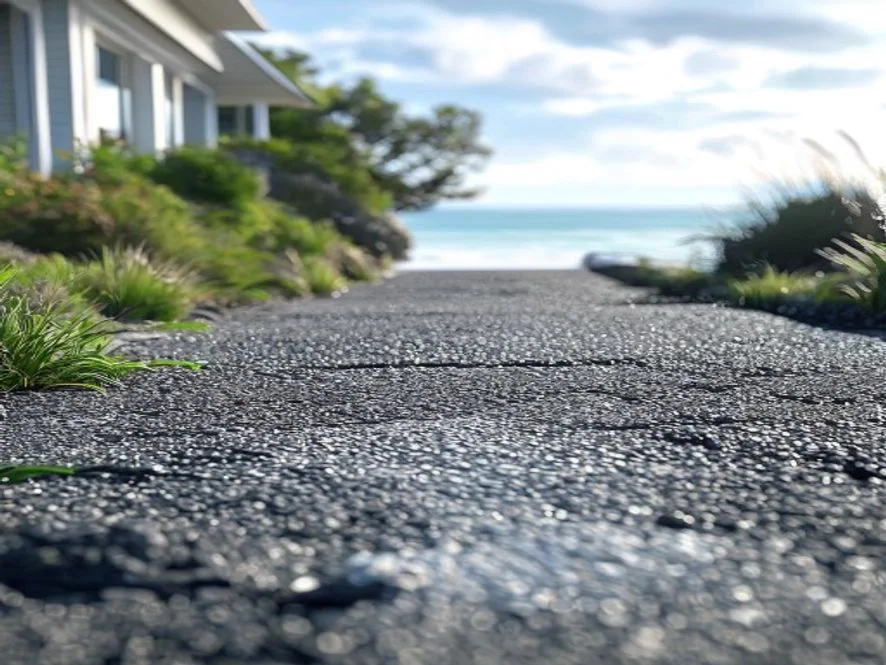
Why coastal driveways wear faster
The ocean is hard on asphalt. Three things gang up on it near the shore. Once you know them, the care plan makes sense.
First, salt hangs in the air all day. Second, the air stays damp most of the year. Third, the ground is often loose sand. Each one cuts the life of your drive. They add up fast.
An inland drive might last 20 to 30 years. A coastal one often shows wear by year 12 to 18. That's a big gap for the same asphalt. But smart care closes much of it. And none of it costs a fortune. It's mostly about timing and a stronger build.
How salt air ages a coastal asphalt driveway
Salt air dries out asphalt fast. The sun and air pull the oils from the binder. The binder is the black glue that holds the stones. As it dries, the top fades to gray. It turns dry and brittle too.
By the sea, that fading comes faster. Salt and damp pull at the surface day and night. You may see gray patches in three or four years. Inland, that can take twice as long.
Brittle asphalt cracks sooner. Once water gets in a crack, it works deeper. Then small cracks grow into big ones. Salt in that water makes it worse. Want the full picture? See how weather affects asphalt driveway lifespan.
Sandy soil and the base
Sand makes a tricky base. It shifts and moves when wet. But a drive needs a firm, packed base. That's what keeps it flat and crack free.
On sand, a thin base will sink in spots. That means low spots and cracks in a few years. A good coastal job uses a deep stone base. I like at least 8 to 10 inches of crushed stone. Pack it tight in layers.
Geotextile fabric helps a lot too. The crew lays it between the sand and the stone. It stops the stone from sinking into the sand. On the coast, that fabric is worth it. Skip it and the drive can fail early. Spend a little more here. Your base will last much longer.
Drainage near the ocean
Water is the real threat near the ocean. Heavy rain and high water tables are both common. So your drive must shed water fast.
Aim for about a 2 percent slope. Run it away from the house. That's a quarter inch of drop per foot. Water should never pool on top. It shouldn't sit at the edges either.
Salt water is worse than fresh water. If salt sits on the asphalt, it speeds the damage. Learn more about whether salt harms an asphalt driveway. Good drainage keeps standing salt water off the slab. Add a small channel drain if your lot stays wet. It can save the whole drive over time.
The right mix and sealing schedule
A coastal driveway needs a tougher build. It needs more sealing too. Here's what I tell beach house owners.
- Base depth: 8 to 10 inches of packed crushed stone.
- Fabric: add geotextile over the sand.
- Asphalt thickness: 3 inches of packed asphalt, not 2.
- First seal: wait 6 to 12 months, then seal it.
- Sealing cycle: reseal every 2 years, not 3.
- Drainage: slope 2 percent away from the home.
Treat this as your coastal checklist. Hand it to any paver you call. Want mix and paving standards? The National Asphalt Pavement Association is a solid source.
Spotting early damage
Catch problems early. The fixes stay small. Walk your drive once a month. It only takes a few minutes.
Look for a gray, dull color first. That's the binder drying out. Next, scan for thin cracks. Hairline cracks near the sea grow fast. Check the low edges for standing water after rain.
Feel the surface too. Loose stones brush off when the top wears thin. That's your sign to seal soon. Catch these signs early. Then a small seal job won't turn into a full repave. A few minutes a month buys you years.
A simple coastal care routine
You don't need to baby a coastal drive. You just need a steady plan. Stick to it all year.
Rinse it with fresh water now and then. This washes off salt before it sits and dries. After a big storm, give it a quick hose down. Clear sand and grit from the edges. Then water can drain freely.
Fill cracks the week you spot them. Small cracks turn into big ones fast by the sea. And stick to that two year sealing cycle. Not sure how often to seal? Our guide on how often to sealcoat asphalt covers it. Do these few things. Your beach drive will hold up well.