Winter is the season that ages an asphalt driveway fastest. The damage is rarely from snow itself. It comes from the freeze-thaw cycle, the wrong deicer, and a metal shovel meeting a soft spot. This guide covers what actually protects an asphalt driveway through winter and what shortens its life. For the broader maintenance picture, see our 5-year maintenance schedule.
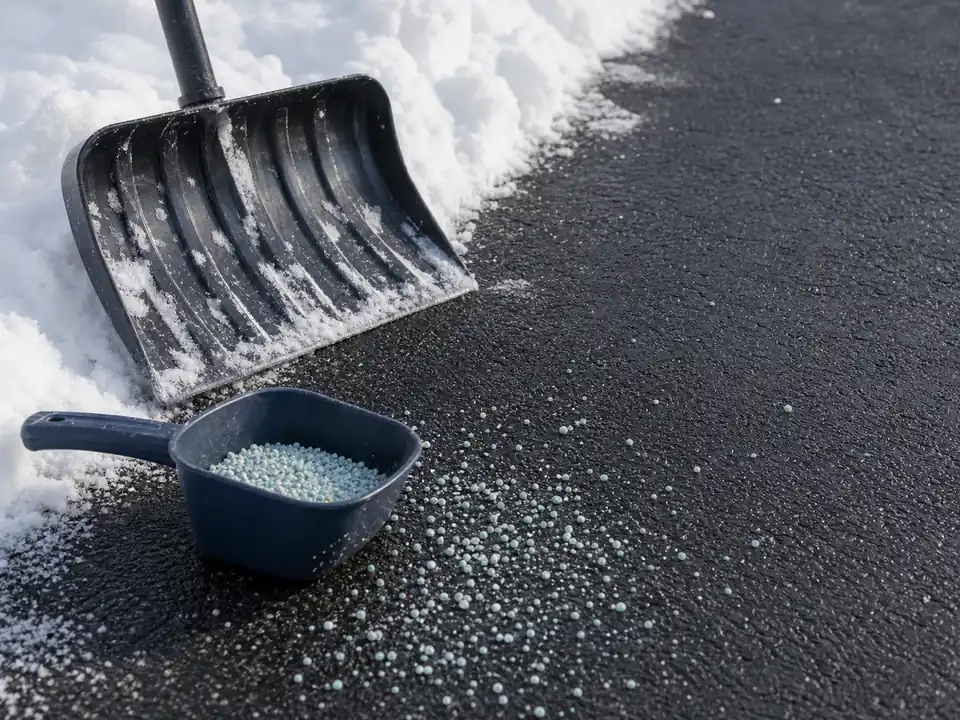
How winter actually damages asphalt
Three mechanisms work together. The driveway does not care about temperature; it cares about water inside the pavement.
- Freeze-thaw cycling. Water in surface pores and small cracks expands when it freezes. Each cycle widens the cracks a little. Multiply by 30 to 80 cycles per winter in the northern US.
- Salt-driven melt and refreeze. Deicers turn ice into water on a surface that may refreeze hours later. The melt water wicks into cracks and pavement pores. The next freeze damages more than the original ice would have.
- Snow piles holding moisture. Plowed snow on cracked sections pumps moisture into the base for weeks. Soft saturated base under heavy snow is how spring potholes get born.
The Federal Highway Administration publishes pavement preservation guidance that names freeze-thaw as the leading northern-state failure mode. The fix is not to fight winter but to limit water access.
The right ice melt for asphalt
- Calcium chloride. The asphalt-safe pick. Works down to about minus 20 degrees Fahrenheit. Less corrosive overall than rock salt. Faster melt action.
- Magnesium chloride. Also asphalt-safe. Works down to about minus 5 degrees Fahrenheit. Less harsh on plants and concrete sidewalks too.
- Rock salt (sodium chloride). Cheap and common. Works only down to about 15 degrees Fahrenheit. Use sparingly. Heavy use accelerates freeze-thaw damage.
- Calcium magnesium acetate (CMA). Premium pick. Pet-safe and plant-safe. Mild on asphalt. Expensive. The EPA's snow and ice management resources have product guidance for homeowners trying to limit chloride runoff.
- Sand (no melt). Adds traction without melting. Asphalt-safe. Pair with a small amount of deicer for icy conditions.
Deicers to avoid (or use carefully)
- Heavy rock salt loading. Damages asphalt indirectly through freeze-thaw. Damages concrete sidewalks directly. Bad for plants and metal.
- Urea fertilizer as deicer. Works only down to about 25 degrees Fahrenheit. Bad for groundwater. Not asphalt-safe at high concentrations.
- Hot water. Melts now, refreezes harder later. Common forum suggestion that creates more damage than it solves.
Snow shovel rules
- Use a plastic shovel. Or a plastic-edged metal shovel. Pure metal blades can chip the surface, especially on hot-summer-soft asphalt.
- Push, don't chop. Lift the blade slightly off the surface and push the snow forward.
- Clear early and clear often. Two passes during a storm are easier on the driveway than one heavy clearance afterward.
- Watch for ice ridges. The ice ridge formed by repeated plowing becomes a freeze-thaw cracking line.
Snowblower rules
A snowblower is gentler on asphalt than a metal shovel. The skid shoes ride on the surface, the auger lifts snow off the surface. Homeowners who want to skip manual clearing entirely can look at heated driveway snow-melt systems, which melt snow before it accumulates. Two notes:
- Adjust skid shoes to leave a thin layer. About 1/4 inch. Too low scrapes the surface; too high leaves usable snow.
- Avoid running over patches. Cold patch is drivable but a hard auger blade hit can rip a patch out.
The small habits that protect the driveway
- Sealcoat on schedule. A sound seal resists water penetration. Use the sealer calculator when it is reseal year. Read the sealer comparison for product picks.
- Fill cracks every fall. Sealing cracks before freeze-thaw season is the highest-leverage maintenance task. See how to fix cracks.
- Clear standing water before a freeze. Squeegee or sweep low spots dry. A freeze on a puddle is a future crack.
- Keep snow piles off cracked sections when possible. Pile to one side that is structurally sound.
- Sand for traction, not deicer. Especially in shoulder cold spells (low 20s).
- Avoid heavy point loads on cold days. Trailer tongues and RV jacks on cold asphalt can punch through.
Spring repair pass
The first warm week after winter is when small cracks become visible and small failures get caught early. Walk the driveway. Note new cracks. Schedule the spring crack-fill afternoon. Use the repair playbook to match each new defect to the right fix.
Winter buildup that is normal vs not normal
- Normal: White salt residue on the surface after melt. Hose off in spring.
- Normal: Hairline cracks appearing each spring. Fill them.
- Not normal: Soft spongy areas under foot. Base saturation. Investigate.
- Not normal: Recurring potholes in the same spots. Base failure. Read lifespan and warning signs.
- Not normal: Settled or pumping sections. The driveway is moving under traffic.
References for the deicer chemistry and freeze-thaw data are on the sources page.