Short answer: A delivery truck cracked my driveway. So who pays? The carrier or its insurance is often liable. But you must prove the truck did it. Take photos before and after. Get the driver's name and company. File the claim fast. Thin or hot asphalt cracks the easiest. So keep heavy trucks off when you can.
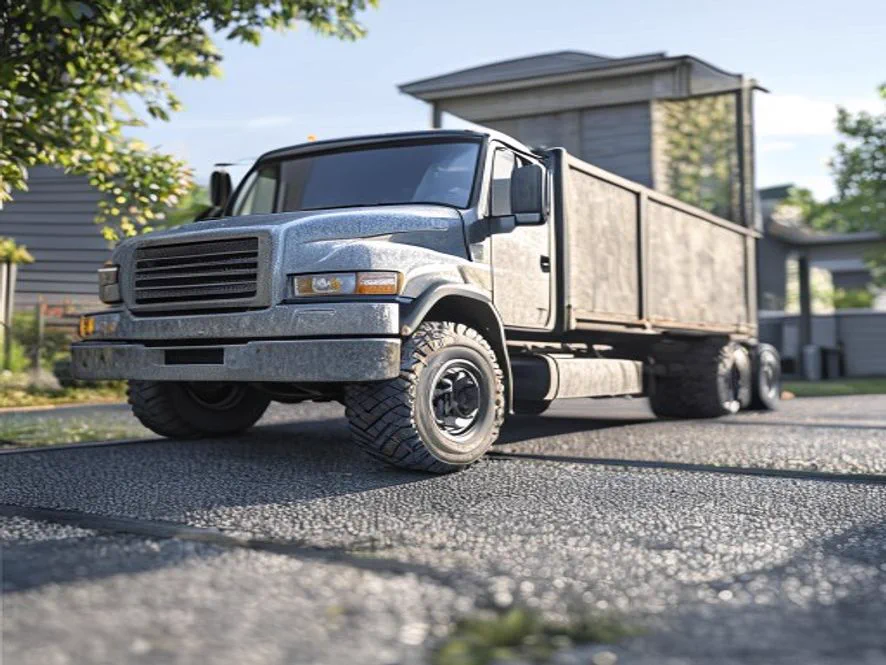
Why heavy trucks crack a home driveway
A home driveway is built for cars and light trucks. A loaded truck weighs far more. A full concrete truck can hit 30 tons or more. That load presses down on a small spot under each tire.
Most home driveways use two to three inches of asphalt. It sits on a gravel base. That's fine for daily cars. It's not made for heavy axles. The weight pushes through. Then the asphalt cracks or sinks.
Is your driveway thin? Then the risk is higher. Our driveway thickness guide shows what's normal and what holds up. A thick base spreads the load. It fights off this kind of damage too.
Who is liable when a delivery truck cracked my driveway
This is the part people most want to know. Liability rests on proof. The firm that owns or runs the truck may be liable. But you must show the truck did it.
- The carrier: Often liable if their truck caused clear, new damage you can prove.
- The driver's boss: May be on the hook even if a contractor drove.
- You: May share blame if you waved the truck onto a driveway you knew was weak.
- Your insurer: May help, then chase the carrier to get the money back.
There's no promise the firm will just pay. Many will push back. That's why your photos and notes matter so much. For how home insurance treats this kind of claim, see the Insurance Information Institute.
When the asphalt is most at risk
Timing and heat matter a lot. Asphalt gets soft in hot sun. On a 90 degree day, the top can be soft enough to dent. A heavy truck that sits there will leave ruts.
New asphalt is the weakest. Fresh asphalt needs time to cure and harden. Say your driveway is just a few weeks old. A truck on it can do real harm. The same truck might be fine on a cured, cool top.
Thin asphalt raises the risk too. So does a weak base. So does bad drainage. The National Asphalt Pavement Association shows how load and heat team up to break pavement.
How to prevent the damage
The best fix is to stop it before it starts. A little planning protects your driveway. It saves a big repair bill too. Most of these steps are simple.
First, meet trucks at the curb when you can. Have the driver drop the load at the street. Keep it off the driveway. For movers and big deliveries, ask if they can park on the road.
Second, lay down cover. Sheets of thick plywood spread the truck's weight. A wider area takes the load. That cuts the chance of cracks and ruts. Third, keep trucks off fresh asphalt. If your driveway is new, tell the driver to stay on the street. Wait until it has fully cured.
How to document and file a claim
If the damage is done, act fast. Good records win claims. Weak ones get denied. Don't clean up or fix a thing until you have proof.
Take clear photos of the cracks and ruts right away. Get wide shots and close ups. Note the date and time. Write down the firm's name, the plate, and the driver's name. If you have a doorbell camera, save that video.
Then call the firm and your own insurer. Get a repair quote from a paver. That gives you a real number. Keep every email and receipt. If they accept the claim, you can plan the fix. Our guides cover how to repair an asphalt driveway and fixing a settling driveway. They help you judge what the work should cost.
What a fair repair looks like
Not all cracks need a full repave. A few hairline cracks can be sealed. Deep ruts or a sunken spot need more work. Know the difference. It keeps you from paying too much.
Did the base under the asphalt get crushed? Then a plain top patch won't last. The crew must rebuild that spot first. Then new asphalt can go down. A patch over a broken base just sinks again.
Get two or three quotes. Ask each paver to spell out the cause and the fix in writing. That paperwork also backs up your claim. A fair repair brings the driveway back. Back to the shape it was in before the truck rolled on.