Short answer: A dumpster on asphalt driveway can crack or dent the surface. But you can lower the risk a lot. The danger is point load. A loaded roll-off can weigh 6,000 to 20,000 pounds. All that weight rests on a few small rails. On a hot day the asphalt is soft. The rails press right in. Lay plywood under the rails to spread the weight. Place it on the firm middle of the drive. And know this up front. Most rental waivers put driveway damage on you, not the company.
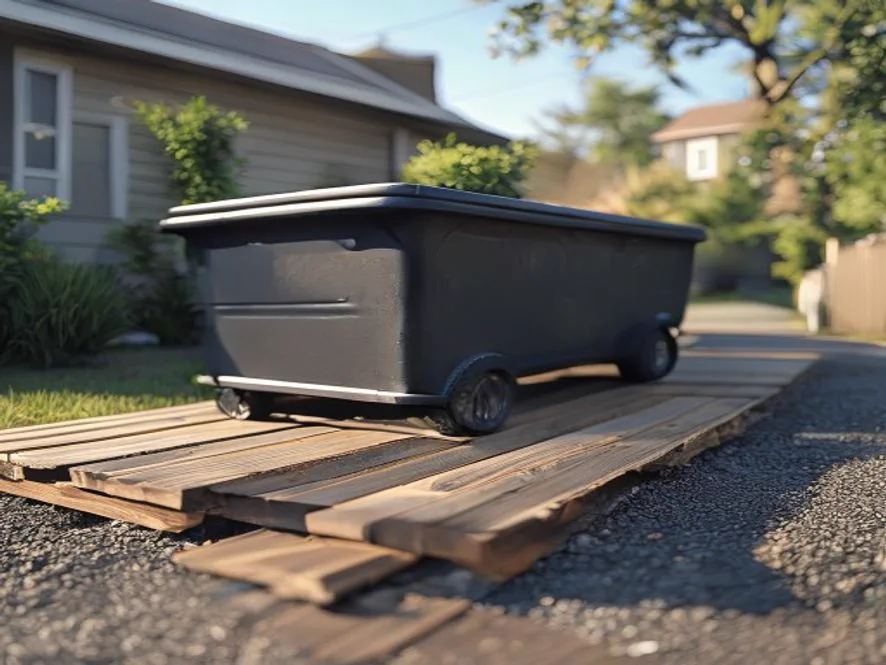
Will a dumpster on asphalt driveway crack it?
It can. But you can stop most of the damage. The weight itself isn't the whole story. Asphalt is built to hold cars and trucks. The real problem is how a dumpster sits.
A roll-off rests on two long steel rails. Those rails are narrow. So all that weight lands on a thin strip of asphalt. That's called point load. It presses hard in one place.
Add heat and the risk goes up. Warm asphalt gets soft. A soft surface takes a print fast. So a hot week plus a heavy box is the worst mix.
Why point loads do the damage
Think about how you stand on snow. Flat boots sink. Snowshoes float. Same idea here. A wide load floats. A narrow load sinks in.
A loaded dumpster can hit 20,000 pounds. The rails might touch only a few square feet. That's a lot of weight per inch. The asphalt has to hold it for days, not minutes.
This is also why the drop-off matters. The truck rolls the steel box off the back. That can drag and gouge the surface. Skip prep, and both the wheels and the rails can leave marks.
How to protect the surface before delivery
The fix is cheap and simple. You spread the load and you add a barrier. A few sheets of plywood do most of the work.
Use 3/4 inch exterior plywood. Lay it flat where each rail will sit. Two layers is better on a hot week or a new drive. Old boards from a past job work fine too.
Fresh asphalt needs the most care. New pavement stays soft for months. If your drive is under a year old, double up the plywood or pick a new spot. Want a sense of what your pavement can carry? See our asphalt driveway thickness guide.
What to put down before the dumpster arrives
Here's a short list to set out before the truck shows up. Keep it ready by the curb.
- Plywood: 3/4 inch exterior sheets, one under each steel rail.
- Extra layer: a second sheet for hot days or new asphalt.
- Scrap boards: short planks to bridge the rail ends.
- A flat spot: the firm middle of the drive, away from the edge.
- Photos: clear pictures of the surface before and after.
That last one matters more than it looks. Photos settle most disputes fast. Take them in good light from a few angles.
Where to place the dumpster
Spot choice is half the battle. Aim for flat, firm, and well drained. The strong part of a drive is the middle. The weak part is the edge.
Stay a foot or two in from the edge. Edges crack under heavy weight. They have less support below. A box parked half on the lawn also tips and digs in.
Avoid low spots where water sits. Wet ground under the asphalt gets soft. If the drive slopes, set the dumpster on the flatter end. Then it won't slide or rock.
Who is liable if it cracks?
This part trips people up. You rent the dumpster, so most of the time you own the risk. The rental contract almost always has a damage waiver. That waiver puts driveway damage on you.
Say the box dents your asphalt. The company often isn't on the hook. The same rule shows up with heavy trucks. We cover that in our piece on a delivery truck that cracked an asphalt driveway.
Read the waiver before you sign. Some firms will note that they're not liable for placement damage. Sometimes a dent shows up later. It can look like normal settling. Our asphalt driveway settling fix guide helps you tell the two apart.
Talk to the rental company first
A quick call up front saves a lot of grief. Ask how they protect driveways. Good companies do this all day and have answers.
Ask if they place boards under the rails. Ask about the truck weight and the drop method. Tell them your drive is asphalt and ask for their care steps. A pro driver will respect that.
The National Asphalt Pavement Association is a solid read. It covers how pavement is built and what it can take. I've seen plenty of dumpsters sit a week with zero damage. The owners just laid plywood and picked a firm spot. The few bad cases all skipped that step.