Short answer: An EV charging cable across a driveway is a real trip hazard. Route it along the edge. Cover it with a cable ramp. Or run it overhead on a reel. For a clean long term fix, bury a line and skip the loose cord. Keep it safe for kids, guests, and delivery people.
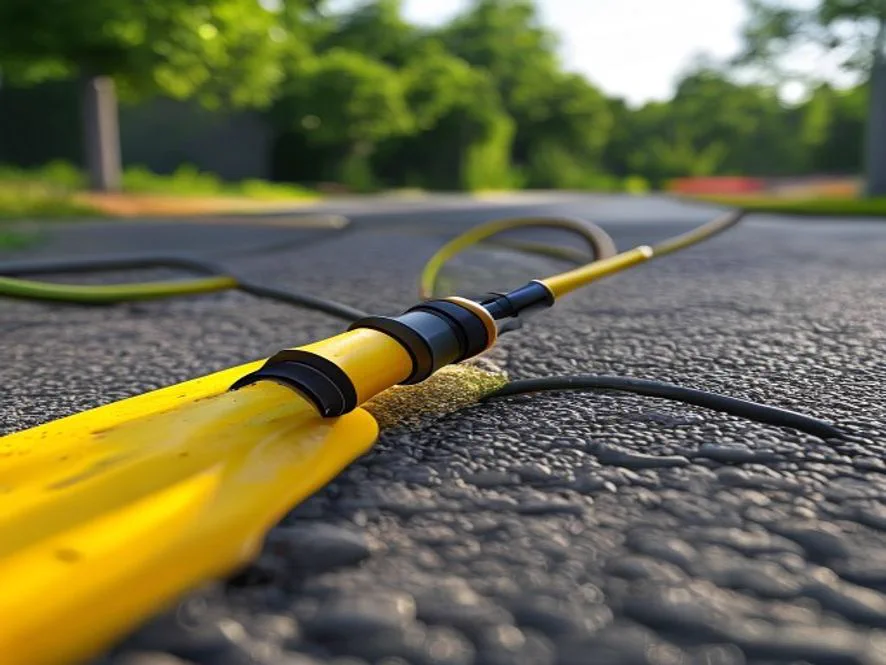
Why a cable across the driveway is risky
A charging cord is round and dark. It blends right into the asphalt. At night you can barely see it. That's how toes get caught and people fall.
The risk grows with the length. A short cord near the garage is easy to step over. A cord that runs the full driveway isn't. Kids run. Guests carry bags. Delivery folks watch the door, not the ground.
There's also the cable itself to think about. A car tire can roll over it. Over time that crushes the wire inside. A damaged charging cable is both a safety and a money problem. So the goal is simple. Keep the cord out of the walking path. Or keep it flat and easy to see.
Fixing the ev charging cable across driveway problem
You have a few good options. Most cost little and take an hour or less. Pick the one that fits your driveway shape.
- Cable ramp: A rubber cover with a slot for the cord. It makes a low, bright bump people can see and step over.
- Edge routing: Run the cable along the driveway edge or a wall, not down the middle.
- Overhead reel: Mount a retractable reel up high. The cord drops straight to the car.
- Buried line: Move the charger closer to the car so no long cord is needed.
- Bright cord: Swap a dark cable for one that's easy to see, or add reflective tape.
A cable ramp is the fastest fix. You can buy one for 20 to 60 dollars. It lies flat and holds the cord. A car can drive over the cover with no harm.
Route the cable along the edge
The cheapest fix costs nothing. Move the cord off the main path. Run it along the side of the driveway, close to the grass or a wall.
Park so the car's charge port faces the charger. That cuts the cord length you need out in the open. A short run along the edge is far safer than a long run across the middle.
If your driveway is wide, this matters even more. A wider driveway gives you room to keep cars and the cord apart. Our driveway width guide shows common sizes and how much room you really get. Use that space to keep the cord out of the way.
Go overhead with a reel
An overhead reel is a tidy fix. You mount a retractable cable reel on the garage wall or ceiling. The cord drops straight down to the car. Nothing lies on the ground at all.
This works best when you park in the same spot each time. The reel pulls the slack back up when you unplug. So there's no loose cord left out to trip anyone.
A good reel costs more, often 80 to 200 dollars. But it solves the problem fully. No ramp, no tape, no cord on the path. For a busy household with kids and pets, that peace of mind is worth a lot.
The clean fix: bury a line instead
The best long term answer is to skip the long cord. Run power under the driveway to a charger near where you park. Then the cable is short and stays by the car.
This is more work and more money up front. But it removes the trip hazard for good. No cord crosses the path, ever. We cover the steps, costs, and trenching in our guide to running an EV charger line under an asphalt driveway.
If you plan this with a new driveway or a repair, it's far cheaper. You dig once while the asphalt is open. A licensed electrician should handle the wiring and the permit. For safety rules on cords and walking paths at work and home, see OSHA.
Weather, wear, and keeping it safe
Charging cables are built for the outdoors. Still, they wear out. Sun, ice, and tire rolls all take a toll. Check the cord often for cuts, cracks, or warm spots.
In winter, don't let the cord freeze into ice or snow. Lift it before it gets stuck. A cord frozen to the ground can rip when you pull it.
Keep the plug end clean and dry. Never leave a damaged cable in use. And think about everyone who walks the driveway, not just you. Pets are part of that too. If your driveway is new, see our note on whether new asphalt is safe for pets before you let them roam.