Until recently, "coal tar or asphalt emulsion?" was a simple performance question. In 2026 it is a health, regulatory, and performance question. State bans, EPA-tracked PAH studies, and big-box retailer policy shifts have changed the answer for most homeowners. Here is the updated comparison, with the data and the practical pick. Plan gallons either way with the asphalt sealer calculator.
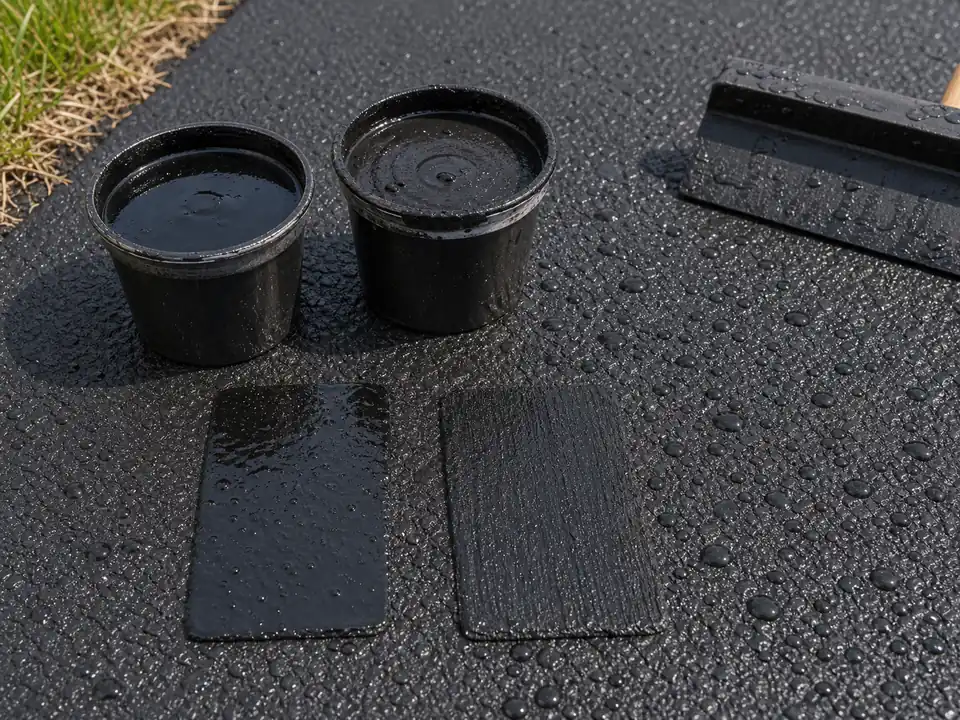
What each sealer actually is
- Coal tar sealer: Refined coal tar pitch (a byproduct of steel coke ovens) blended with water, clay, and additives. Final product is 20 to 35 percent coal tar.
- Asphalt emulsion sealer: Petroleum asphalt cement emulsified in water with surfactants and fillers. Final product is asphalt-based, no coal tar.
- Synthetic / acrylic blends: Newer category. Asphalt emulsion plus polymer modifiers for harder finish and UV stability. Often labeled "premium" or "longest-life."
The health and environmental story
Coal tar sealer contains high concentrations of polycyclic aromatic hydrocarbons (PAHs). The US Geological Survey measured PAH concentrations in coal tar sealer at roughly 1,000 to 3,500 times higher than asphalt emulsion. Several PAHs are classified as known or probable human carcinogens. The US EPA has tracked PAH runoff from coal tar driveways into stormwater for over a decade.
This is the data that has driven the wave of state and city bans.
State bans as of 2026
There is no single nationwide ban on coal tar sealer. But at least 17 states or jurisdictions have restricted or banned it. The list keeps growing.
- New York: Sales banned November 2022, application banned November 2023.
- Minnesota: Statewide ban.
- Maryland: Ban effective October 2023.
- Maine: Ban effective October 2024.
- Virginia: Retail sale banned July 2024, application banned July 2025.
- Washington: Statewide ban.
- Plus city or county bans in Texas (Austin), Illinois (Chicago suburbs), Wisconsin (Madison and others), Michigan (multiple), and many more. The USGS coal tar sealcoat fact sheet maintains a current list of restricted jurisdictions.
If you live in any of those, asphalt emulsion or a synthetic blend is the only legal pick. Check your state and city rules before you buy.
Performance comparison (head to head)
| Factor | Coal tar | Asphalt emulsion | Synthetic blend |
|---|---|---|---|
| Lifespan per coat | 4 to 7 years | 2 to 4 years | 3 to 5 years |
| UV resistance | Highest | Fades faster | Close to coal tar |
| Oil and chemical resistance | Highest | Good, softer to oil | Good |
| Color when dry | Deepest black | Very dark, lightens sooner | Very dark, holds well |
| Smell on application | Strong, lingers for days | Mild, clears in hours | Mild |
| Skin and eye contact | Irritating, more PPE | Mild | Mild |
| PAH carcinogen load | Very high | 1,000 to 3,500x lower | 1,000 to 3,500x lower |
| Legal in all 50 states | No (banned in 17-plus) | Yes | Yes |
Cost comparison
In states where both are legal, prices in 2026 are similar. Both run roughly 25 to 50 dollars per 5 gallon pail at retail, with contractor-grade pails closer to 40 to 70. The shift in coverage is small. Two coats of asphalt emulsion every 3 years is roughly the same total spend over 10 years as two coats of coal tar every 5 years.
What about the "premium" synthetic blends?
Several manufacturers now sell asphalt-emulsion-plus-polymer blends labeled as "longest life," "premium," or "synthetic." They cost 30 to 70 percent more than basic asphalt emulsion. In real world tests they last a year or two longer per coat and look slightly better at year 3. They are also legal in every state. For homeowners willing to pay for fewer reseal cycles, they are the modern pick.
The 2026 practical decision
- Live in a banned state or city? Asphalt emulsion or synthetic blend. No choice.
- Live near streams, ponds, or storm drains? Pick asphalt emulsion or synthetic blend regardless of legality. PAH runoff is a real water-quality problem.
- Have kids or pets that play on the driveway? Asphalt emulsion or synthetic. Lower PAH skin contact risk.
- Want maximum lifespan per coat and live where coal tar is still legal? Coal tar is still the longest-lasting option. Most contractors no longer carry it even where legal.
- Doing your first DIY sealcoat? Asphalt emulsion or synthetic. Easier to clean up, less PPE, milder cleanup.
How to apply either one
The application process is the same. See our full step-by-step in how to seal an asphalt driveway DIY. Time it with our when to sealcoat rule. Avoid the common DIY sealcoating mistakes that wreck either kind.
References for the bans, PAH data, and lifespan figures are on the sources page.