DIY sealcoating saves real money when it is done right. When it is done wrong, the seal peels in a year, the driveway looks worse than before, and the next sealcoat costs more because the failed seal has to come off first. Here are the ten mistakes that account for most failed home sealcoats. Avoid these and you will be in the clear. For the full positive walkthrough, see how to seal an asphalt driveway DIY.
1. Sealing too soon on new asphalt
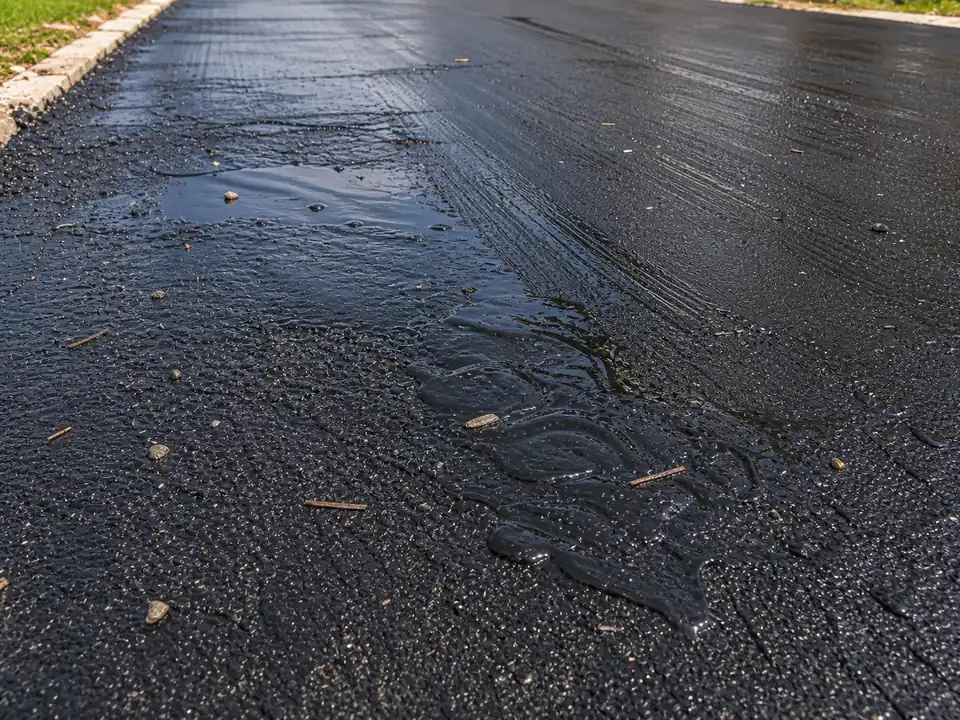
The biggest mistake. New hot mix needs 6 to 12 months for the volatile oils to evaporate and the surface to fully cure. Seal at 30 days and you trap those oils inside. Result: soft tacky surface, tire marks for life, and a sealer that peels off the still-curing asphalt. The full timing rule is in our when to sealcoat guide.
2. Skipping the clean step
Sealer does not bond to dust, dirt, oil, or weeds. A 30 minute sweep, wash, and dry doubles the lifetime of the seal. Skipping the clean is the second most common cause of peeling.
3. Sealing over un-filled cracks
Sealer is not a crack filler. It cracks at the same lines and the filler underneath cannot bond to the sealed surface. The right order: clean, fill, cure, seal. Match each crack to the right filler in our fix cracks guide.
4. Sealing in the wrong weather
Daytime highs need to be above 50 degrees Fahrenheit and rising. Below that, the sealer cures unevenly and peels. Above about 95 with hot direct sun, the sealer flashes off and leaves a thin uneven film. Cool damp days are worse than cool dry days. Best windows are late spring and early fall in most of the US. The National Asphalt Pavement Association publishes the placement and cure temperature data that underlies this rule.
5. Applying too thick
One heavy coat dries unevenly, cracks on its own as it cures, and wears off in tire tracks fast. Two thin perpendicular coats give a smoother finish and longer life. The squeegee should leave the surface texture visible through the wet sealer.
6. Sealing every year
Sealer builds up over years. By the time you have annual coats stacked four high, the layered seal becomes brittle and flakes off in chunks. Sealing every 2 to 4 years (matched to surface condition, not the calendar) is the right cadence. Read the timing rule in when to sealcoat.
7. Sealing over un-cleaned oil stains
Sealer does not bond over oil-saturated asphalt. The oil works through the seal and lifts it off the stained area within months. Clean stains first using our oil stain removal guide. For heavily contaminated spots, an oil spot primer is the right prep before sealer.
8. Wrong tool, wrong technique
A driveway squeegee with a foam edge is the standard tool. A long-nap roller works for smaller jobs. A floor mop, paint roller without nap, or a rented power sprayer set wrong all leave streaks or thin spots. Cut the edges first with a brush. Spread the body of each coat in one direction with the squeegee.
9. Putting cars on too soon
Sealer needs 24 to 48 hours of car-free time after the final coat. Putting a car on at 12 hours leaves visible tire marks and pulls the not-quite-cured sealer off. Block the apron with cones or string. Cooler weather extends the cure time.
10. Buying the wrong sealer
Three categories of products show up at the hardware store. Asphalt emulsion (the standard pick). Coal tar (banned in many states, see coal tar vs asphalt emulsion). And "driveway resurfacer" or "filler-sealer" hybrids that promise to fix cracks and seal in one step. The hybrids do neither well. Use a real crack filler, then a real sealer. Plan gallons with the sealer calculator. The EPA stormwater program publishes guidance on which sealer chemistries trigger PAH-runoff rules in your watershed.
Bonus mistake: trying to power-wash off old sealer
An aggressive pressure-washer setting can strip old sealer in narrow stripes. The result looks worse than the original surface. If the existing sealer is failing, light power wash plus broom is the right prep. Heavy stripping is a contractor job.
What a good sealcoat actually looks like
- Uniform black across the whole surface, no streaks.
- Surface texture still slightly visible through the seal, not glossy.
- Edges cleanly cut against grass, sidewalk, and garage threshold.
- No tire marks, no footprint marks, no peeling at year one.
- Looking dark and tight after the first heavy rain.
References for the mistakes, manufacturer guidance, and product chemistry are on the sources page.