Weeds in driveway cracks are a maintenance signal, not just a cosmetic problem. Where there are weeds, there is also a crack open to water, wind-blown seeds, and freeze-thaw stress. Kill the weed and you fix one symptom. Fill the crack and you fix the cause. This guide does both, with the right product chemistry. For the broader crack story, see our how to fix cracks guide.
Why weeds grow through asphalt
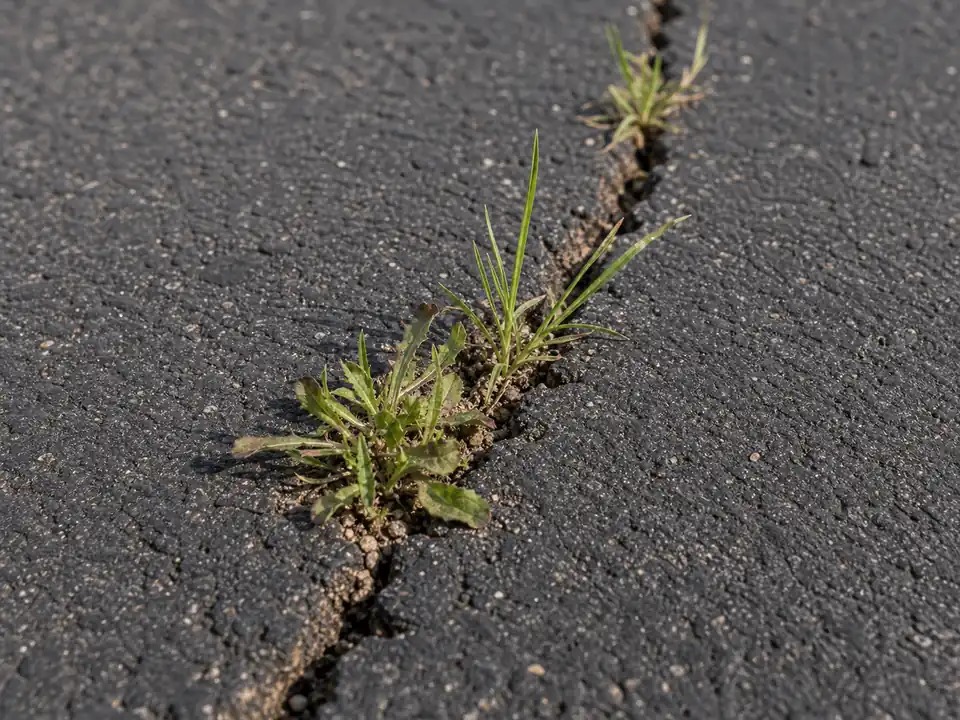
Asphalt itself is not soil. Weeds do not grow out of the asphalt. They grow out of cracks where windblown soil and seeds have collected, and where moisture stays long enough to germinate. The crack itself is the root cause. As long as the crack stays open, new weeds will keep showing up no matter how many you kill.
Three ways to kill weeds in cracks
All three of these work. Pick whichever you have on hand.
- Vinegar plus salt. Mix 1 gallon of 5 to 10 percent white vinegar with 1 tablespoon of salt and 1 teaspoon of dish soap. Spray directly on the weed. Best on a sunny day so the leaves dry-out fast. Reapply if regrowth.
- Boiling water. Pour a kettle of boiling water directly into the crack and on the weeds. Cooks the plant from the leaves down. Sometimes needs two or three pours over a few days. Free, no chemicals, no residue.
- Glyphosate herbicide. Apply per the label. Most effective on established weeds because it translocates to the roots. Do not apply on a windy day. Do not over-apply. The US EPA classifies glyphosate as a registered pesticide with use-restriction labels.
| Method | How fast | Kills roots? | Cost | Best for |
|---|---|---|---|---|
| Boiling water | Hours, may need 2 to 3 pours | Partly | Free | Chemical-free quick kill near pets and plants |
| Vinegar plus salt | 1 to 3 days | Surface roots | $5 to $10 | Small cracks and a non-toxic option |
| Glyphosate herbicide | 3 to 7 days | Yes, reaches the roots | $12 to $25 | Established or deep-rooted weeds |
What does not work well
- Bleach. Damages plants and pets but also strips sealcoat pigment. Not asphalt-friendly.
- Gasoline or motor oil. Solvents in fuel soften the asphalt binder. The weed dies and the asphalt under it becomes a soft spot.
- Pulling without killing. Hand-pulling alone leaves part of the root in the crack. The plant regrows from there.
Step by step: kill, clean, fill
- Pull what you can by hand. After rain or watering. Wet soil releases roots more easily.
- Apply your kill agent. Vinegar mix, boiling water, or glyphosate. Saturate the crack and 2 inches around it.
- Wait 3 to 7 days. Until weeds brown out fully. Reapply if any green is still visible.
- Clean the crack. Stiff brush, then leaf blower. Crack must be dry and clean before sealing.
- Fill the crack. Pourable filler for hairlines, rubberized for wider. Smooth flush.
- Sealcoat (optional). If reseal is due. Use the DIY seal guide. Plan gallons with the sealer calculator.
Long-term prevention
- Fill cracks every spring. Open cracks are where weeds start.
- Sealcoat on schedule. Every 2 to 4 years on existing asphalt.
- Keep edges clean. Most cracks start at edges where soil meets asphalt.
- Re-grade soil away from the driveway. Soil higher than the asphalt surface dumps seeds and dirt onto cracks.
- Use a pre-emergent herbicide along edges. Optional, but stops germination of windblown seeds. The Penn State Extension turfgrass program has homeowner-friendly application timing for pre-emergents in northern climates.
Pet and child safety
- Vinegar plus salt: Safe to walk on once dry. Avoid getting in pet eyes during application.
- Boiling water: Safest of the three. Just keep pets and kids away during the pour.
- Glyphosate: Wait until fully dry, usually 2 to 4 hours. Read the label for re-entry interval.
Cost summary
- Vinegar plus salt approach: 5 to 10 dollars total for materials.
- Boiling water approach: Cost of boiling a kettle.
- Glyphosate spray: 12 to 25 dollars for a hose-end bottle.
- Crack filler for prevention: 5 to 12 dollars per bottle of pourable filler.
For the wider yard-edge picture, the Old Farmer's Almanac publishes seasonal weed-control timing for North American climates. References for the products and chemistry above are on the sources page.